
Summary
- Wireless EV charging uses electromagnetic fields to transfer power from ground pads to vehicle receivers.
- There are two types of wireless car charging. They are: static charging and dynamic charging.
- Some benefits of wireless charging include the absence of cables or manual plugging, enhanced safety, reduced wear and tear on charging equipment, and help in reducing range anxiety, especially with dynamic charging.
- Self-charging EVs use solar panels, regenerative braking, and wireless charging to minimize driver involvement.
- Wireless charging works by using inductive charging, which requires vehicle alignment.
Table of Contents
Introduction: The Evolution of EV Charging
Electric vehicles (EVs) have evolved significantly from niche experiments to widespread adoption. However, even with improvements to battery technology and increasing driving ranges, there remain problems with convenient and accessible charging, which is where wireless EV charging comes in.
One of the biggest hurdles to widespread EV adoption is charging convenience. Although we have seen vast improvements from the early, slow, and plug-in models to high-speed DC chargers and smart grid integration, the next leap, according to experts, is wireless charging.
This technology is more than just convenience; it eliminates cables, automates the entire charging process, and efficiently reduces charging time, which could cause downtime for fleets.
What Is Wireless Car Charging?
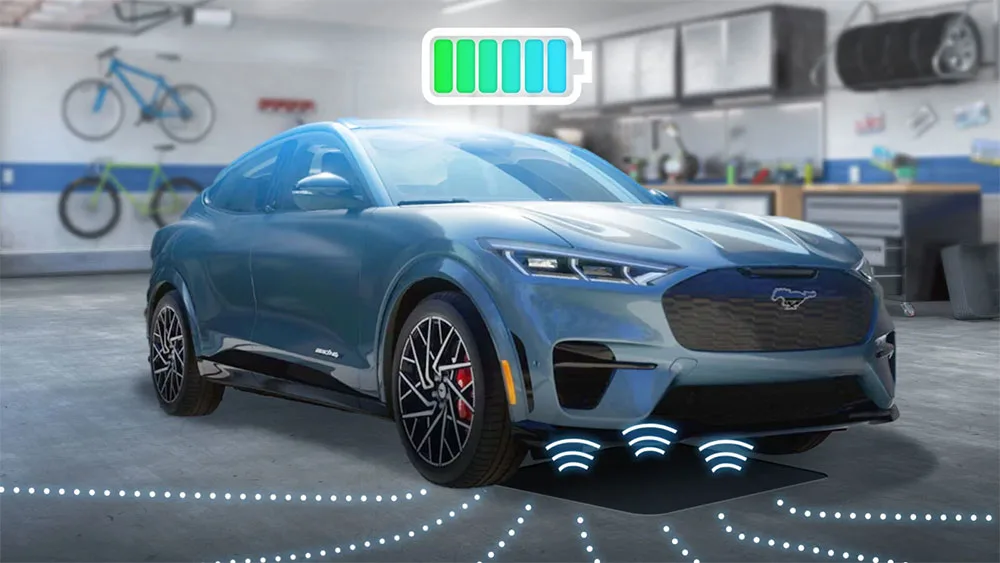
Wireless electric car charging is a technology that allows you to charge your EV’s battery without using a physical plug or cable. This technology transfers power through electromagnetic fields, which move between charging pads found on the ground and receiver pads installed inside the vehicle.
Just like how smartphones receive power wirelessly, but on a larger technological scale. There are two main types of wireless electric car chargers. They are:
- Static Wireless Charging: For this type of charging to occur, your car needs to be stationary. When the vehicle is parked over a charging pad, charging begins automatically.
- Dynamic Wireless Charging: This type of charging happens while your vehicle is in motion. The technology involves embedding charging pads over roads and highways, and as your vehicle passes over the pads, your car charges automatically and continuously. This way, you can travel long distances without needing to stop.
Benefits of Wireless EV Charging

Wireless electric car charging offers several advantages over traditional plug-in charging methods. It provides a better user experience and charging efficiency. Key benefits include:
Convenience
Wireless charging removes the need for heavy cables and connectors. Drivers can simply park over a charging pad, and their battery starts charging automatically. Additionally, since you don’t need to leave your vehicle or go through the process of plugging and unplugging cables, you save more time and gain convenience, especially during bad weather.
Safety
EV charging cables can be damaged over time, particularly in extreme temperatures. This situation poses a great danger not only to your car but also to yourself. Wireless charging removes this risk. Additionally, with exposed cables, there’s a chance of tripping or electrical accidents, especially in public charging stations.
Reduced Wear and Tear
Since there are no cables or connectors, there’s less wear and tear on your charging equipment and charging port. This reduces maintenance costs and increases the lifespan of your battery and charging pad.
Eliminates Range Anxiety
Dynamic wireless charging enhances convenience. Drivers don’t need to stop their cars, but can charge while on the road. This effectively reduces range anxiety and simplifies the charging process.
Potential for Autonomous Charging
Wireless charging is perfect for autonomous electric vehicles. These vehicles can charge automatically without human help, effectively improving fleet operations and management.
The Rise of Self-Charging Electric Cars
Self-charging EVs further reduce driver involvement in charging by utilizing automated energy recovery and charging technology. These vehicles integrate regenerative braking, solar panels, and wireless charging to maintain a charged battery with minimal human intervention.
While no electric vehicle can fully recharge itself yet, some models are equipped with solar panels that provide supplemental energy, especially for short-distance drives. Others are designed to connect automatically to wireless charging pods at work or in public spaces.
Beyond wireless pads, automakers are exploring even more autonomous solutions; enter the self-charging EV.
Office Charging Revolution: Charging Pads at Work
As more people switch to electric vehicles, workplaces are becoming key players in promoting EV adoption. One of the major trends contributing to this charge is the increasing availability of electric car charging pads at office car parks. These pads are transforming EV convenience as drivers can just park in their assigned spaces and start charging immediately.
This technology is particularly well-suited for offices, as it eliminates the need for constant monitoring and the hassle of plugging and unplugging cables. Employers benefit too, as green incentives such as workplace charging can help attract and retain talent, support sustainability goals, and prepare for an EV-driven future.
Providing wireless charging pads at work improves accessibility to charging stations and helps reduce range anxiety.
How Wireless EV Charging Works: Behind the Tech

Wireless electric vehicle (EV) charging is a groundbreaking approach to EV charging that harnesses electromagnetic fields to transmit energy from a charging station to an electric car. This process, known as inductive charging, works much like a transformer, utilizing coils to generate and receive electromagnetic fields.
A transmission system installed under the road or the floor of a parking lot/charging station generates a magnetic field that is picked up by the receiver built into the vehicle, transforming it into electricity for the car.
Charging through this method is not just about parking over the charging pad, but also ensuring the automatic alignment system confirms correct positioning for charging. Some advanced models utilize communication between the vehicle and the station to optimize energy transfer and enhance efficiency.
The efficiency of wireless charging currently varies between 85% and 95%, values which are increasingly close to those of wired systems.
Plugless EV Charger Solutions in the Market
Here are the leading plugless EV charger solutions in the market:
- Plugless Power: Plugless is the world’s first wireless EV charging station. It offers home and fleet-ready systems that support up to 7.2kW charging and deliver between 20–25 miles of range per hour. Plugless systems are compatible with a range of electric vehicles, including Tesla Model S, Nissan LEAF, Chevy Volt, and BMW i3.
- WiTricity: This provider offers magnetic-resonance-based wireless charging, capable of efficient power transfer through various materials, including concrete, wood, asphalt, and even over short distances. Its support ranges from 3.6 kW to 11 kW systems.
- Electreon: This is a leading provider of wireless charging solutions for electric vehicles. This company specializes in dynamic wireless charging, embedding coils in roads to recharge cars while they are in motion. Notable projects include a one-kilometer electrified autobahn in Germany and upcoming highway tests in the US, specifically Detroit and Indiana.
Challenges and Limitations
Wireless electric vehicle (EV) charging presents several challenges and limitations that impact its widespread adoption and effectiveness. Here are the primary challenges:
Efficiency
Wireless electric car charging is not as efficient as traditional plug-and-charge models. Traditional plugs have an efficiency rating of 80-95%, while wireless chargers, such as those from WiTricity, have an efficiency rating of 90-93%. While the gap might not seem much, it manifests as extended charging durations and potential energy losses.
Cost
The financial aspect of installing a wireless EV car charger poses a significant challenge, particularly in the early stages of adoption. The investment required for installation is one of the key factors preventing businesses from embracing this technology as their preferred charging solution.
Standardization
The need for cohesive industry standards is a persistent challenge that the wireless electric car charging industry must address. Different manufacturers use different technologies and standards. These issues slow adoptions, lead to compatibility problems, and cause confusion about which charger is right for specific vehicle models.
Future of Wireless EV Charging and Self-Charging Vehicles

Although wireless EV chargers have seen significant advancements in their technology and implementation, exciting days lie ahead. The following are future trends in wireless and self-charging electric cars:
Improved Charging Speed
With improved understanding of wireless connections, battery technology, and technological advancements, wireless charging methods are expected to meet and exceed the charging speed and efficiency of traditional chargers.
Dynamic Charging
Dynamic charging will not only enhance convenience and improve the user experience, but it will also reduce range anxiety.
Sustainability
The integration of wireless charging with renewable energy systems, such as solar panels or smart grids, could make charging greener and more sustainable.
Conclusion
Wireless EV charging is not just about convenience, but also about enhancing transportation systems, simplifying charging, and reducing energy waste. While there are still challenges such as the cost of the chargers, charging speed, and standardization issues, the gaps are closing quickly.
As technology improves, it won’t just make life easier for drivers or help companies achieve sustainability goals – it’ll redefine transportation, energy transfer, and improve living standards. Do you need more information on wireless car charging technology? Ask our experts.
FAQs
Wireless electric vehicle charging offers several advantages, such as convenience, safety, and reduced maintenance for charging equipment.
Wireless charging enhances user experience by offering automatic charging and convenience to EV drivers.
The future of wireless electric car charging focuses on improving speed, developing dynamic charging systems, and promoting environmental sustainability.
The key challenges of wireless electric car charging include high cost of equipment and installation, slow charging speed, and standardization.
While wired charging offers a better efficiency rating, wireless options are more convenient and safer to use.
Yes, wireless charging uses more electricity than traditional EV chargers. They have a lower efficiency rating, resulting in slower charging and increased energy consumption.
Yes, wireless charging does stop automatically when the battery is full. It utilizes smart communication protocols to monitor the battery level and stops charging when the level is complete.
Wireless electric car charging is 85-93% efficient, depending on the system and the vehicle’s alignment with the charging pad.
No, wireless charging does not drain a car’s battery. Rather, it is the opposite as it fills up a car’s battery, helping to reduce range anxiety and enhance convenience.
No, wireless chargers do not shorten battery life as long as the system is well-designed and properly used or maintained.