

Summary
- EV adoption is growing fast, expected to reach 40% of new global sales by 2030, so businesses need to adapt to stay relevant.
- Installing wall chargers raises property value, improves occupancy rates, and supports green building credits.
- Customers, tenants, and employees benefit from convenient on-site charging, which boosts satisfaction and loyalty.
- Costs range from $1,500 to $10,000 for hardware plus installation, but incentives and rebates help, and long-term returns come through higher rents, charging fees, and stronger brand value.
- Offering EV charging sets businesses apart from competitors and positions them as forward-thinking and sustainable.
Table of Contents
Introduction
Installing EV wall chargers in commercial buildings is not just about sustainability. It boosts property value, attracts tenants, enhances employee satisfaction, and prepares buildings for future EV adoption.
The International Energy Agency (IEA), projects that global electric car sales will reach over 40% of global new car sales by 2030. So, businesses that want to thrive in this electric world will have to keep up or risk losing customers, employees, and tenants.
For this reason, adding commercial EV charger wall installation is a smart and strategic decision for all kinds of businesses, from retailers to logistics providers to apartment complexes. This article explores the top reasons to install electric vehicle (EV) wall chargers in public spaces, what to expect from the installation process, and how these smart solutions can benefit your business.
What Is an EV Wall Charger?
An EV wall charger is an electric vehicle charging unit that is installed and mounted on a wall or fixed structure, offering a safe, space-saving solution. This device is commonly found at homes or level 2 charging stations, offering reliable, convenient, and faster charging services.
For commercial buildings, wall chargers are compact and easy to install on walls or dedicated stands. They can also be installed in parking areas or garages.
Why Commercial Units Should Consider Installing EV Wall Chargers

For most business owners, EV chargers are an expensive resource and may not want to invest in it. But the benefits to a commercial property owner are more than any cost. Here is why you should definitely install wall chargers for electric vehicles on your property:
Meet Growing EV Demand from Customers and Employees
As EV ownership grows, customers, employees, and tenants will increasingly seek out businesses and properties that provide convenient charging options. Commercial properties that install EV wall chargers not only accommodate this rising demand but also create an attractive environment that supports long-term engagement. A U.S Department of Energy (DOE) report shows that on-site EV charging helps attract and retain top talent.
For employees, on-site charging offers peace of mind and reduces the stress of finding public stations.
Enhance Your Property Value and Appeal
Installing EV charging stations makes your property more appealing to eco-conscious businesses and renters. It can also help you score credits for LEED Building Rating Systems, which can help reduce property value and commercial rents.
Promote Sustainability and Corporate Social Responsibility (CSR)
Commercial EV wall charger installation can future-proof your business and enhance its sustainability efforts by helping to meet emission reduction goals. For instance, providing wall chargers at the workplace encourages your employees to adopt and drive electric vehicles, which can lower the level of emissions associated with your business.
Additionally, a Deloitte survey revealed that consumers are using their buying power to reward brands that deliver on sustainability promises.
Competitive Advantage in the Market
Since not all commercial spaces offer EV charging, being one of the few grants a first-mover advantage in the industry. It gives you a competitive edge, helping you stand-out from competitors and establishing your company as an EV-friendly destination. This ensures you secure loyalty and a significant market size before the trend becomes common.
Understanding the Cost of Installing EV Wall Connectors
One of the first questions that a property owner asks is “How much will it cost to install EV chargers?”. The answer is that it depends on several factors including labor rates, cost of the unit, and additional upgrades. Luckily, the cost can be reduced with government and utility incentives.
The average EV level 2 wall charger costs:
- Hardware (charger unit): Commercial wall chargers typically cost $1,500 to $10,000, depending on features like smart connectivity, brand, and power capacity.
- Installation Labor: Hiring a licensed electrician typically ranges from $3,000 to over $10,000, depending on site conditions, wiring needs, and permits.
- Additional Upgrades: Some properties may need panel upgrades or additional trenching work, which can add $2,000 to $10,000 to the bill.
Incentives and Tax Credits
The government and many states offer incentives that can help reduce the cost of installing EV wall chargers on your commercial property. For instance:
- The Federal Alternative Fuel Infrastructure Tax Credit provides up to $100,000 per site for qualifying commercial EV charger installations.
- States like California and New York offer additional rebates through utility programs. Some of those programs include MCE EV Instant Rebates for multifamily and commercial customers, Anaheim Public Utilities and San Jose Clean Energy also provide additional support for installers.
Long-Term ROI
While it may take a while, commercial properties can recoup their investments through:
- Charging or Advertising Fees: Offering pay-per-use charging creates revenue. Since these charging spots are places of convergence, you can also charge other businesses a fee to advertise their products to EV drivers.
- Increased Rent and Property Ratings: Properties with chargers often achieve higher occupancy and leasing rates.
The Installation Process
Installing EV wall chargers on your property is a very complex process. To ensure safety, compliance, and long-term performance, it is best to involve a professional technician from the very beginning.
Professional EV Charger Wall Installation Electrician
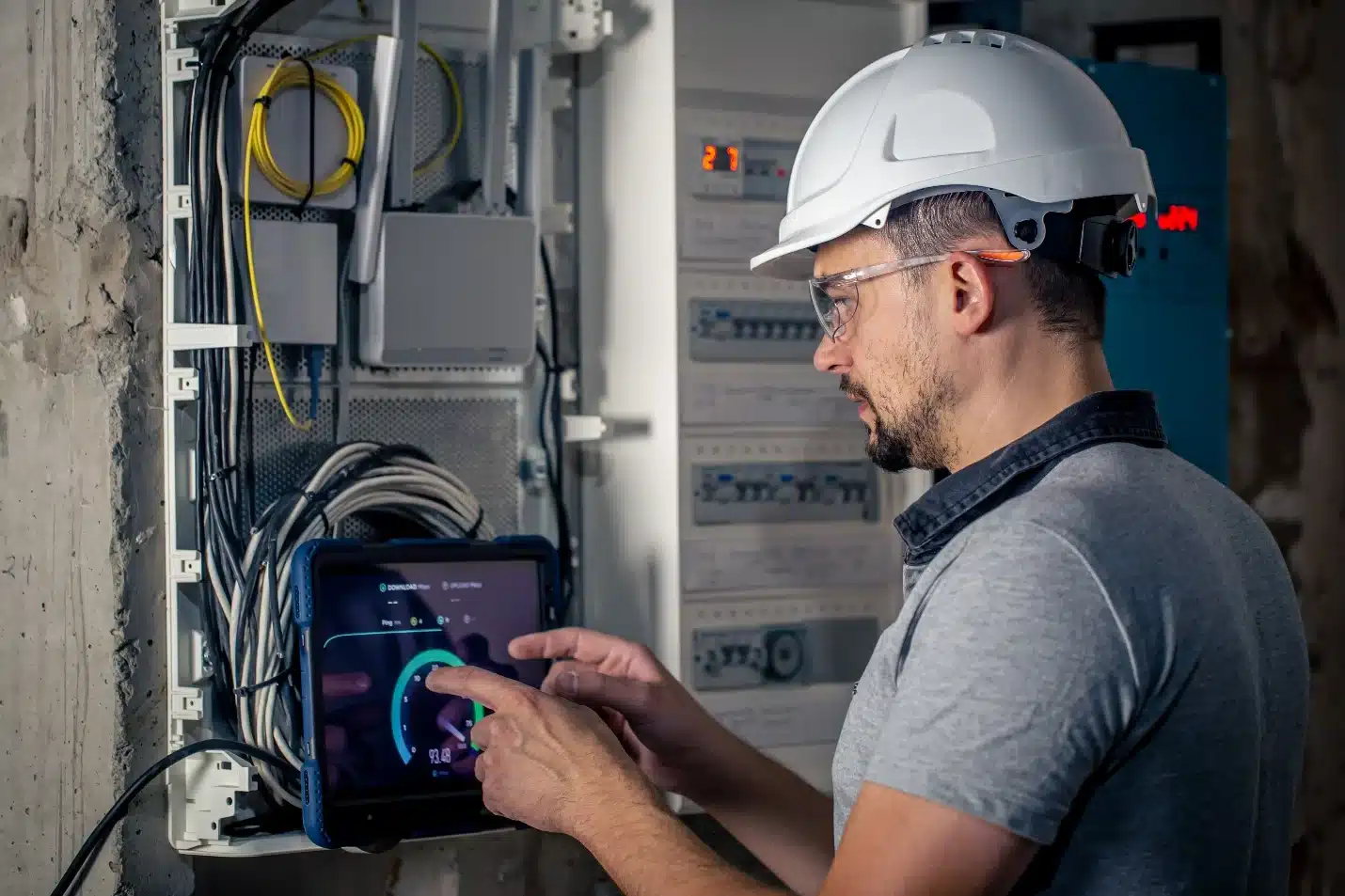
A licensed electrician with EV installation experience is critical to the success of any EV charger installation. Their tasks involve:
- Assessing Electrical Capacity: The electrician will evaluate your building’s current electrical panel and determine if it can support multiple EV chargers or if upgrades are needed.
- Handle Permits and Compliance: EV charger installation qualifies as additional load on your property which requires approval from local building authorities. A licensed electrician will also ensure your charging infrastructure is in line with the guidelines of the National Electrical Code (NEC).
- Ensure Safety and Efficiency: Professional installation prevents risks like overheating, improper grounding or system overloads.
What to Expect During Installation Help for EV Wall Charger
EV charger installation process can be a bit complicated if you have no idea what is going on. Here is what to expect during installation:
- Site Assessment: The electrician will evaluate your electrical system, parking layout, and choose an ideal charger location.
- Permitting and Approvals: Your electrician will submit building or installation plans to the relevant authorities for approval and permits. The local authorities may conduct inspections to ensure compliance.
- Electrical Work: This includes working on the necessary panel upgrades, wiring, trenching, or mounting units.
- Charger Installation: Once the infrastructure is ready, the chargers are mounted on walls, wired into the electrical system, and tested.
- Integration Smart Features: For smart chargers, this is where the electrician will set up softwares for remote monitoring and reporting, user authentication (RFID cards and mobile apps), and payment features.
- Final Inspection and Activation: Before activation, local inspectors will ensure the system meets all safety and electrical codes. After inspection and approval is given, your chargers are then activated for public use.
Features and Benefits of Smart EV Charger Wall Installation
A smart EV wall charger offers advanced features that deliver convenience, efficiency, and profitability to commercial properties. Here are some of the features and their benefits:
- Remote Control and Monitoring: EV smart chargers allow owners to monitor and control charging sessions from a smartphone app. The chargers connect to a cloud-based platform, giving you real-time data and control. These statistics allow you to monitor energy consumption, track usage patterns, and perform remote diagnostics to minimize downtime.
- Dynamic Load Management: This feature prevents system overloads and tripping breakers by ensuring that power is distributed evenly among multiple chargers.
- Payment Integration: Smart chargers are equipped with built-in payment systems, allowing businesses to easily monetize charging. Most smart EV chargers integrate mobile apps, RFID cards, or credit card terminals for payment.
Specific Applications: EV Charger Wall Mount for Hotels and Offices

EV chargers bring the most value in places where people park for long periods. Two examples of this are office buildings and hotels.
Installing EV wall chargers in a hotel makes your businesses a destination for drivers needing a rest and some charge before continuing on the road. Charging keeps guests longer on your premises, driving higher spending at restaurants, bars, and other amenities.
EV chargers at office buildings are a strong perk for recruitment and employee retention. It also helps companies achieve their corporate social responsibility goals.
Conclusion
Installing EV wall chargers is no longer an option for businesses looking to thrive and survive in the current ecosystem. They are a necessary amenity as it boosts customer loyalty, brand awareness, revenue, property value, and gives you a significant advantage over your competitors.
While the initial investment cost may seem too much, the fact is, the rewards outweigh the costs. If you need more information on EV charger installation and maintenance, book Tercero Inc. now.
FAQs
Smart EV chargers help with load balancing, which helps prevent overloads and electrical fire. They also enhance accessibility, functionality, and efficiency of your chargers. They enable remote monitoring which helps reduce downtime.
An EV charger is the device that supplies electrical power for recharging electric vehicles.
Your charger should be installed somewhere you can easily park your car and plug to charge. Consider a convenient charging spot.
Commercial-grade chargers cost $1,500 to $10,000 per unit, with installation ranging from $3,000 to $10,000 depending on site conditions. Older buildings may need electrical upgrades, which can add to costs.
Yes. The Federal Alternative Fuel Infrastructure Tax Credit offers up to $100,000 per site, and many states provide rebates of $2,000 to $5,000 per charger. These can significantly reduce upfront costs.
Yes. Smart EV chargers allow you to set pricing per kWh, per session, or per hour. Payments can be collected via apps, credit cards, or RFID systems.
Absolutely. Studies show commercial properties with EV chargers can command rental premiums and attract higher-quality tenants or more frequent guests.
Hotels, offices, retail centers, and multi-tenant buildings see the strongest ROI because guests, shoppers, and employees spend several hours on-site, making charging both convenient and valuable.
Yes. Smart charging systems support load balancing, allowing multiple chargers to share available power without overloading the grid.
Energy costs depend on usage and utility rates. However, with smart load management and off-peak scheduling, property owners can control costs.